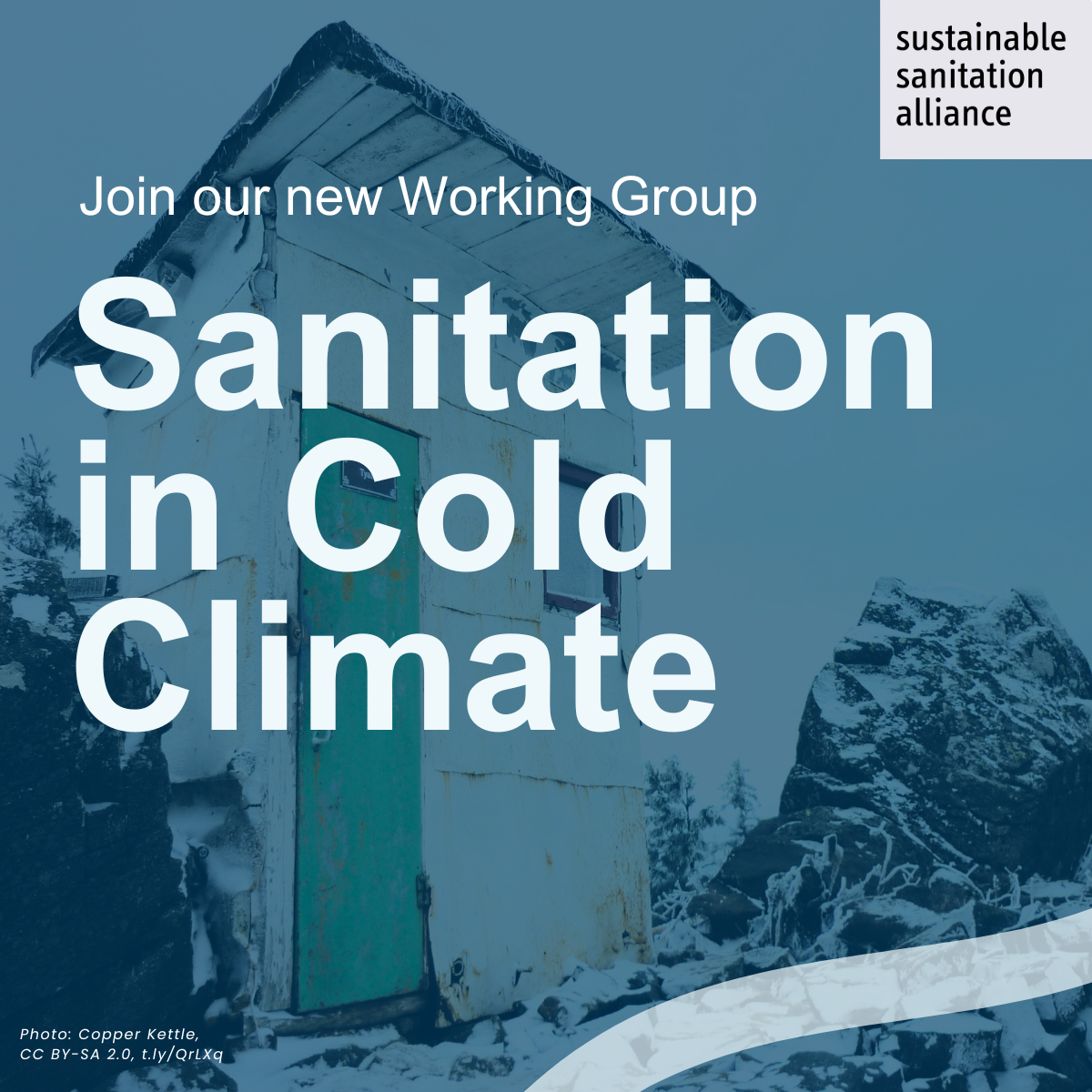
This segment addresses the unique challenges faced in cold regions, high-altitude areas, and places with significant seasonal changes. From freezing temperatures to limited water access, supply chain constraints, and infrastructure resilience, we aim to develop and exchange knowledge on sanitation solutions tailored to these conditions.
Webinar #5. Challenges and Learnings for High-Altitude Lodges in the Swiss Alps - 03 September 2026
Speaker: Lukas Ulrich (Vuna Ltd)
Webinar Summary:
This session highlighted the challenges faced by mountain huts in the Swiss Alps. These high-altitude lodges are often situated in extreme locations, where they must contend with harsh environmental conditions. This demanding context also offers valuable opportunities for learning and innovation in the field of sanitation. Lukas Ulrich explored specific challenges and presented a variety of implemented practical solutions through case study examples.
Webinar #4. Feasibility Study Presentation: Compact and Modular Solutions in Cold Climate Context and Ukrainian Standards - 11 June 2026
Speakers: Vincent Soulard and Frederic Lacaze (Veolia group)
Webinar Summary:
In this webinar session on sanitation in the cold climate of Ukraine, Vincent Soulard and Frederic Lacaze (Veolia group) presented their feasibility study on an ongoing project commissioned by the Agency for Restoration Ukraine in collaboration with UNICEF Ukraine. The presentation included findings concerning compact modular systems for retrofitting wastewater treatment plants in Ukraine's cold-climate conditions. Based on the study’s assessments from within six distinct Ukrainian municipalities, the presenters outlined a proposed treatment approach, cost considerations (CAPEX/OPEX), and an implementation roadmap.
The webinar highlighted considerations aimed at complying with Ukrainian as well as with EU standards and the high urgency for the modernization of plants which were built under the Soviet Union in the 60s and 70s. The speakers articulated the constraints faced in this project heightened by the lack of resources resulting from the ongoing conflict. In addition, Ukraine experiences long periods of sub-zero temperatures, which significantly affect biological wastewater treatment processes and thus exclude conventional technologies from being suitable options. As the pressure exerted by urban development on land availability is increasing, treatment plants must occupy as little space as possible and therefore use compact treatment technologies.
Consequently, Membrane BioReactors (MBR) and Moving Bed Biofilm Reactor (MBBR) were considered. MBBR was identified as the preferred solution due to its resilience in cold climates, operational simplicity, adaptability, and lower maintenance requirements. The project is planned to proceed with additional technical investigations, site surveys, and validation of the study by Ukrainian authorities, alongside environmental, social, financial, and climate-related assessments.
Webinar #3. Source Separation in Norway - 12 March 2026
Speaker: Professor Petter Jenssen, Norwegian University of Life Sciences (NMBU)
Webinar Summary:
Marine biologists say the Oslo Fjord is dying, and that the main cause for the eutrophication is too high nitrogen (N) input. This has initiated plans for N-removal from wastewater, centralizing the treatment to a few larger plants focused on nitrogen removal - not recycling. The most extreme plan is to collect all wastewater and send it to one large treatment system that requires 119km of piping in the sea. While this system would be particularly vulnerable to breaking or sabotage, it would also mean that previous investments in local small systems will have been lost.
We are living in a period of changes and uncertainty in terms of both climate and geopolitics. We must prepare to ensure national sovereignty and food security in the face of more intense precipitations and erratic weather patterns, as well as potential geopolitical instability. This calls for limiting our dependency on the finite fossil resources and fuel that we are using to produce fertilisers.
Nitrogen (N) and phosphorus (P) are among the most essential nutrients in food production, and are found in high amounts in human waste. Ammonia (NH3) for instance, 80% of which is used for fertiliser production, is currently one of the most important industrial chemicals worldwide - its production accounting for 2% of total world fossil energy use. Recovering N and P from human waste would allow for great cost savings, stronger food sovereignty and better preparedness.
But the common sewage systems using water to flush and transport human excreta are leaving us with a technical challenge: nitrogen removal is highly energy demanding. In places relying on coal or oil for electicity production, this means that the N-removal process releases more NOx into the air than it removes from wastewater, thus simply displacing the problem from water to the atmosphere.
There is hope, however, as according to the Finnish Environment Institute we should be able to recover up to >70% of the nitrogen from human waste within 10 to 30 years (vs. 6% today) thanks to source separation.
Indeed, the nutrients found in wastewater mostly come from human waste - 90% of N, 80-90% of P, 80% of K (potassium), and over 50% of organic matter. It is already possible to extract P (through the precipitation of struvite, an excellent slow release fertiliser, allowed in both conventional and organic agriculture in EU) and N (through Ammonia stripping), provided a high concentration of P and N. But conventional sewage systems dilute human waste, which end up constituting only 1 % of the total sewage volume in these systems, whereas the high concentrations needed for extraction are found naturally in source-separated urine and blackwater.
The potential for resource recovery from source-separated human excreta was successfully demonstrated in a recent EU project that terminated 3 years ago (https://www.sieugreen.eu). The blackwater and organic household waste from student housing were collected to produce biogas - which could then be burnt for electricity and heat. The nutrient-rich effluent from the reactor and CO2 released in the process both were funnelled to a nearby greenhouse, super-insulated with 40 cm of soap bubbles (which also shades against heat in summer, thus operating year round, and has very low energy requirement).
Such a system can be scaled up (like in Helsingborg, Sweden). It can also be used in small treatment plants, like in Harestua (Norway).
Source separation and advanced sludge treatment are the key.
They allow for circular solutions, cost savings, and better preparedness
Disclaimer: Due to a poor internet connection during the webinar, some parts of the audio may be unclear or not fully audible. Thank you for your understanding.
Webinar #2. Sanitation at -60°C: The Untold Story of ANTARCTICA - 11 December 2025
Speaker: Yannick Fagon
Kick-Off Meeting Cold climate working group - 15 May 2025
Speaker: Judith Maréchal
You can find the meeting notes here.